
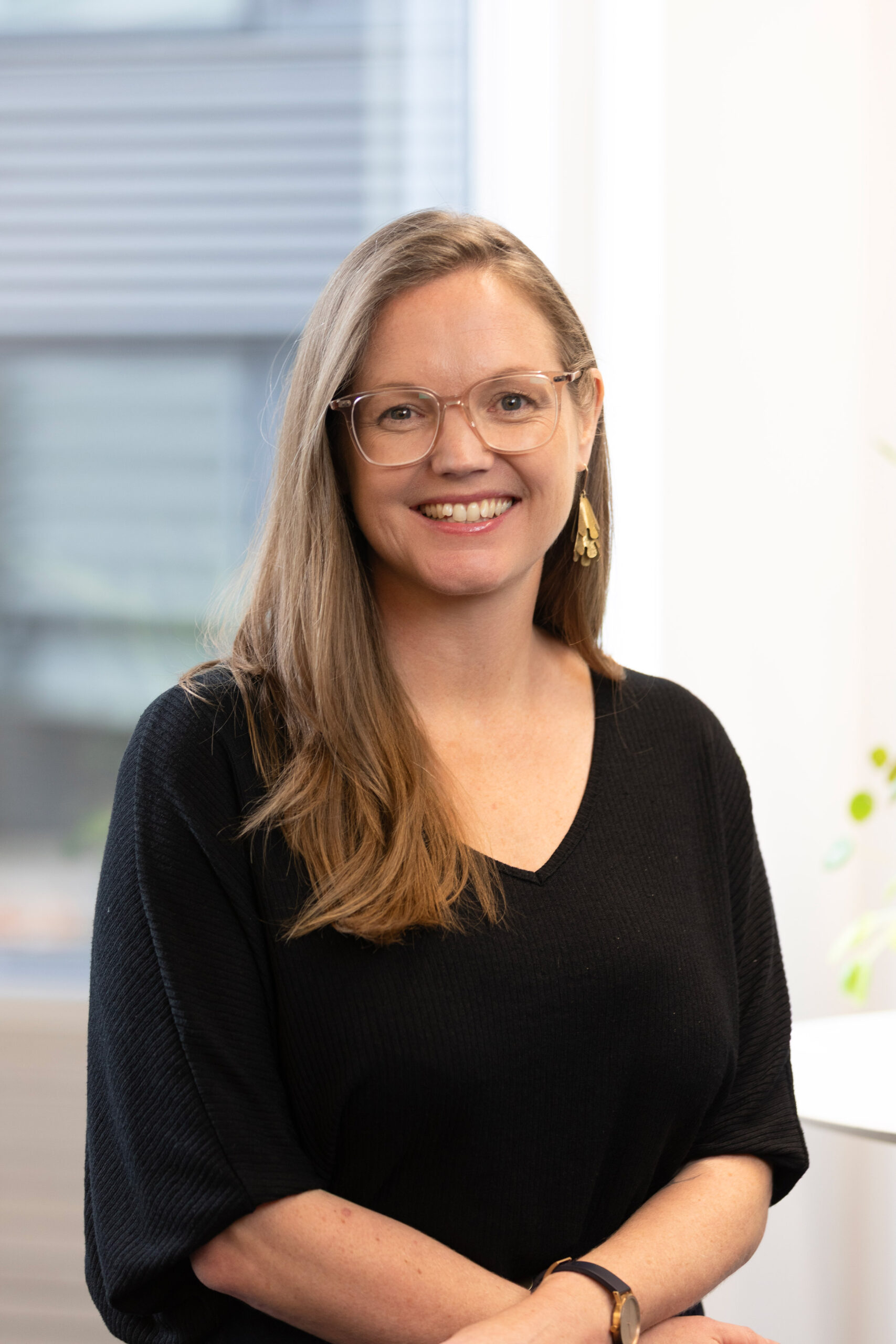
"Think about the skills you have and how they could be applied to the challenges we face" says Purcell's Laura Baron
How I got my job: Laura Baron is head of sustainability at Purcell Architects. She explained to Dezeen Jobs how she leads the practice's environmental and social strategy, from the projects it delivers to the impact of its day-to-day operations.
Name: Laura Baron
Job title: Head of sustainability
Company: Purcell
Location: London
Dezeen Jobs: Your role is to spearhead Purcell's sustainability strategy. As a large practice with sensitive projects, diverse in heritage, how does this work?
Laura Baron: Since I joined Purcell, we have become a B Corp-certified business and strengthened our position as leaders in sustainability within the heritage sector.
A key part of my role is helping project teams and clients navigate decision-making so that sustainability is embedded throughout the process.
At a project level, my role is to champion environmentally and socially responsible design at every stage. The aim is not for me to be directly involved in every project, but to equip our teams with the knowledge, tools and confidence to lead these conversations themselves.
I work with project teams at the earliest stages, developing practical toolkits and guidance, delivering continuous professional development, and providing technical analysis and support where needed.
I am also responsible for building sustainability knowledge and skills across our 350 staff, ensuring colleagues have access to the training and resources they need to make informed decisions.
Alongside this, I work closely with external organisations that are helping drive change across architecture and heritage. I am a trustee and steering group member of Architects Declare, a charitable organisation of more than 1,400 signatory practices committed to reversing the negative impacts of the built environment.
I have also contributed to several publications. I authored the Heritage Building Retrofit Toolkit in partnership with the City of London Corporation, which sets out a comprehensive approach to carbon reduction and climate resilience in heritage settings.
The project involved extensive consultation with owners and occupiers of historic buildings across the Square Mile. I have also contributed, on behalf of Purcell, to publications such as Historic England’s Handbook for Energy Efficiency in Historic and Traditional Buildings.
Dezeen Jobs: What does day-to-day work look like?
Laura Baron: No two days are the same. One day, I might be facilitating a workshop to help a client define their sustainability ambitions; the next, visiting one of our regional studios to share knowledge and build confidence in our sustainability messaging.
On another day, I might be analysing data on our operational footprint or organising an event that brings together expertise from across the sector to discuss ways to address the climate emergency.
The days I enjoy most are those that involve meaningful conversations, often leading to new ways of thinking about a problem.
Dezeen Jobs: How did your career lead you to become head of sustainability at Purcell?
Laura Baron: I began my career as a qualified architect in the new-build housing sector. In 2019, as the climate movement gained momentum, I started looking more closely at the impact of the built environment.
The following year, the RIBA’s Built for the Environment report highlighted that the built environment was responsible for almost 40 per cent of global greenhouse gas emissions, while Architects Declare was amplifying a similar message.
That was a turning point for me. I realised I could make far more impact through my professional work than through individual lifestyle choices alone, important as those still are.
I joined Architects Climate Action Network (ACAN) and later volunteered with LETI (Low Energy Transformation Initiative), both of which showed me the power of collective action in shifting the conversation around sustainability. I began by contributing design and graphics support, then taught myself the technical side of sustainable design in my own time rather than returning to formal study.
From there, I started applying for sustainability roles, which were far less common at the time. When the opportunity at Purcell came up, it felt like a natural fit.
I wanted to move away from new build and towards working with existing buildings, because I believe a sustainable future is one rooted in circularity, where we value, care for, and adapt what we already have.
Dezeen Jobs: What did you study?
Laura Baron: I studied architecture at the Welsh School of Architecture, where I completed a BSc in Architectural Studies and an MArch in Architecture. I later gained my RIBA Part 3 at London Metropolitan University.
My architectural training gave me an appreciation of the positive impact good design can have on a place. It also provided a strong foundation in systems thinking and in communicating complex ideas clearly and simply.
Dezeen Jobs: What's been the most rewarding part of your role?
Laura Baron: The most rewarding part has been seeing how much the conversation in the sector has changed - and being part of that change. When I first joined, heritage and sustainability were often presented as opposing priorities.
Over time, I have seen that view shift significantly. There are still tensions to navigate, but heritage can be a powerful catalyst for positive change, offering lessons in how we build a more resilient and regenerative future.
Dezeen Jobs: What advice can you give students or people wanting to go into heritage architecture with a focus on sustainability?
Laura Baron: Heritage conservation is inherently sustainable in many ways, but there is still much more to do to embed climate literacy, technical knowledge and confident decision-making across the profession.
I would like to see a future where every job is a green job. Addressing the climate emergency and creating a future in which we can all thrive will require action from all of us, in every role and at every level.
For anyone looking to build a career in this area, the first step is to recognise that sustainability is not only for those with it in their job title. Think about the skills you already have and how they could be applied to the many challenges we face.
Seek out opportunities to build both technical knowledge and practical experience, stay curious, and think critically about the role the built environment plays in shaping our shared future.
Sustainability is not a specialism sitting alongside good design and placemaking; it is an essential part of it.
Dezeen Jobs: How I Got My Job
This article is part of Dezeen Jobs: How I Got My Job, a series of interviews exploring diverse career paths within architecture and design.